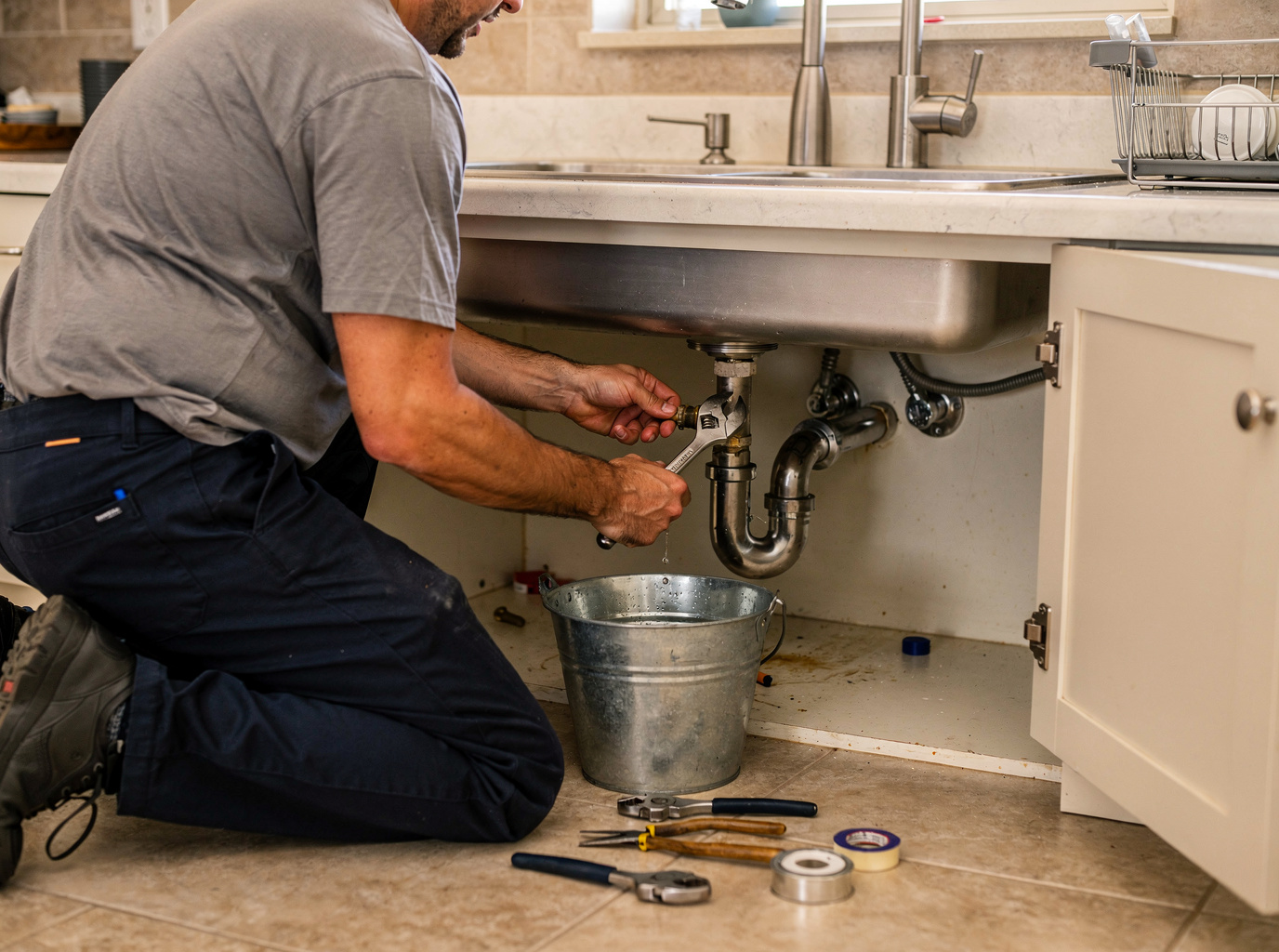
Kitchen Plumbing Repair in San Antonio, Texas
Your kitchen carries more water pressure, more heat, and more daily use than almost any other room in the house. The faucet runs several times a day, the dishwasher cycles through hot water most evenings, and the garbage disposal handles everything from coffee grounds to chicken bones. When one of those components fails, the damage often spreads into the cabinet base, the subfloor, and the wiring for the disposal before anyone notices. Water Heater Repair San Antonio provides kitchen plumbing repair for homes across San Antonio and Bexar County, from older homes near Alamo Heights and King William to newer subdivisions on the city's north and far south sides.
Our work covers the parts of the kitchen plumbing system that homeowners actually use and that actually fail: faucet cartridges and valves, garbage disposals, supply lines, under-sink shutoff valves, dishwasher connections, and the drain lines that carry waste out of the sink. We do not treat a kitchen as a single fixture. We look at how water enters the room, how it leaves, and how each connection is holding up under the pressure and temperature it sees every day.
Why Choose Us for Kitchen Plumbing Repair
Most kitchen plumbing problems are small when they start and expensive when they are ignored. A supply line that weeps at the s nut will eventually let go behind the cabinet, and a shutoff valve that has not been turned in years can seize at the moment you need it most. Our approach is to find the failing part, explain exactly what is wrong and why, and repair it in a way that holds.
We put findings in writing before any work starts. You will see which component has failed, what the repair involves, and which parts we recommend, so you can make the decision with the facts in front of you. When the job is complete, we walk you through the old parts and the new parts side by side, showing you what wore out and what replaced it. You can inspect the workmanship yourself, and you are welcome to ask questions about any part we have installed.
We work with the realities of Bexar County housing. Homes in older neighborhoods such as Alamo Heights and King William often have plumbing that was never designed for today's dishwashers and disposals, so connections need to be checked for compatibility rather than assumed. Homes in newer developments around the city may have shorter, more uniform runs, but the same hot-summer conditions still take a toll on rubber seals and braided lines.
Signs You Need Kitchen Plumbing Repair Now
Some kitchen plumbing problems announce themselves clearly. Others hide until they cause real damage. Contact us promptly if you notice any of the following:
- Water pooling under the sink or a damp smell inside the cabinet base, even if the leak seems slow.
- A faucet that drips when closed, sprays unevenly, or takes longer than usual to reach full hot water.
- A garbage disposal that hums without turning, leaks at the flange, or drains slowly after a normal load.
- Dishwasher water that backs up into the sink or leaves residue and standing water after a cycle.
- Under-sink shutoff valves that are stiff, weeping at the stem, or do not fully close.
- Stains, warped laminate, or soft spots on the cabinet floor or the kitchen subfloor.
San Antonio's hot summers are hard on rubber washers, O-rings, and braided supply lines. Heat accelerates the breakdown of gaskets, and a line that has been quietly weeping for months can let go under pressure on a busy afternoon. Waiting until the cabinet floor is soft usually means the repair has grown from a fitting into a subfloor job.
Our Process for Kitchen Plumbing Repair
Every kitchen plumbing job follows the same sequence. You will know what we found, what we plan to do, and what the finished result will look like before any work begins. The steps below describe how a typical repair moves from first contact to final walk-through.
Parts and Components in a Kitchen Plumbing System
Faucet Cartridges and Valve Assemblies
The faucet cartridge controls how much water flows and at what temperature. Worn cartridges cause drips, sputtering, and hot-and-cold swaps that are hard to adjust. Most cartridge failures are caused by mineral buildup from hard water, which is common across Bexar County, and by seals that dry out over time. Replacing the cartridge usually restores full function without replacing the entire faucet.
Garbage Disposal Units and Flange Seals
The disposal is a motor, a grinding chamber, and a set of seals that keep water inside the unit. Jams are often caused by fibrous food or objects dropped in by mistake, and most can be cleared with the hex key and a reset button. Leaks usually come from the mounting flange gasket or the drain connection, and these can be repaired without replacing the full unit when the motor is still healthy.
Supply Lines and Compression Fittings
Supply lines carry pressurized water from the shutoff valve to the faucet or appliance. Braided stainless lines are common, and they fail at the crimped ends or at the compression nut where the line meets the valve. Heat cycles and age loosen these connections. We check each fitting for corrosion, thread damage, and washer condition, then replace lines that show wear rather than patching them.
Under-Sink Shutoff Valves
The shutoff valve lets you isolate water to a single fixture without shutting off the whole house. Valves that have not been operated in years can seize, weep at the stem, or fail to seal when closed. A failed valve is a serious problem during an active leak, so we test function and replace valves that no longer close fully.
Dishwasher Water Supply and Drain Connections
The dishwasher draws hot water through a supply valve and drains through a hose that connects to the garbage disposal or a dedicated drain port. Common problems include kinked drain hoses, loose clamps, and supply connections that leak at the valve. Proper high-loop routing and secure connections prevent backflow and standing water.
Kitchen Drain Line and P-Trap
The P-trap holds a small amount of water that blocks sewer gas from entering the room. Its slip nuts loosen and its washers degrade, which causes slow leaks under the sink. The drain line beneath the sink carries waste to the main line, and sagging or poorly pitched runs lead to repeated slow drainage. Repairing or re-aligning these components is part of a complete kitchen plumbing repair.
Water Heater Repair and Kitchen Plumbing: How They Connect
Homeowners sometimes assume a kitchen leak comes from the water heater, or the reverse. The two systems share the same supply network but fail for different reasons. A faucet that will not reach hot water may point to a sediment-clogged cartridge rather than a heater problem, and a dishwasher that runs cold may have a supply valve issue unrelated to the water heater's performance. We check the kitchen components first so that any heater work is limited to the heater itself.
Technician insight
In San Antonio, the thing that catches most people out with kitchen plumbing is the supply line behind the cabinet. Our summers push the cabinet interior and the rubber gaskets hard, and a braided line that looks fine from the front can be weeping at the compression nut for months. I always pull the cabinet door and check the fittings by hand, because a damp cardboard bottom or a faint white crust on the valve tells me the leak has been going longer than the homeowner realized.
Hidden Supply Line Leak Under a Southtown Kitchen Sink
The homeowner in a Southtown bungalow noticed a soft spot on the cabinet floor and a musty smell under the sink, but the faucet looked dry. We found a braided supply line with a slowly weeping compression fitting and a shutoff valve that would not fully close. We wrote up the findings, explained which parts needed replacement and why, and then replaced the line and valve. At the final walk-through, we showed the homeowner the old line with its corroded fitting next to the new one and tested the valve to confirm it sealed completely.
Kitchen Plumbing Repair Services We Offer
✓Faucet Cartridge Repair and Replacement
Restores smooth flow and accurate hot-and-cold control by replacing the worn cartridge or valve assembly. Repairing the cartridge often takes less time and causes less disruption than replacing the entire faucet.
✓Garbage Disposal Repair
Clears jams, replaces the mounting flange gasket, and repairs drain connections that leak. When the motor is healthy, targeted repairs keep your disposal running without a full replacement.
✓Kitchen Supply Line Replacement
Swaps out weeping or corroded braided supply lines before they fail behind the cabinet. New lines with properly seated compression fittings reduce the risk of sudden leaks and water damage.
✓Under-Sink Shutoff Valve Replacement
Replaces stiff, weeping, or non-sealing shutoff valves so you can isolate the kitchen sink quickly during an emergency. Working valves protect your cabinet base and your subfloor.
✓Dishwasher Connection Repair
Corrects leaking supply valves, loose drain hose clamps, and improper drain routing that cause standing water and backflow. Correct connections help your dishwasher drain fully and run quietly.
✓Kitchen P-Trap and Drain Line Repair
Repairs or replaces worn slip nuts, washers, and sagging drain sections under the sink. Proper alignment stops slow drainage and blocks sewer odors from entering your kitchen.
How it works
- 1
Initial Contact and Scheduling
You contact us with a description of the symptom, such as a dripping faucet, a leaking cabinet, or a disposal that will not turn. We ask about the age of the home and any recent work, which helps us prepare for the connections we will likely find, particularly in older homes near Alamo Heights and King William.
- 2
On-Site Inspection
We inspect the faucet, supply lines, shutoff valves, disposal, dishwasher connections, and drain line. We check for active leaks, corrosion, mineral buildup, and the condition of the cabinet floor beneath the sink. We test the shutoff valves and confirm water pressure at the fixtures.
- 3
Written Findings Before Work Begins
Before we start any repair, we give you written findings that list each component we examined, what we found, and what we recommend. You see the failing parts, the repair steps, and the expected outcome in writing, and you decide whether to proceed. No work begins until you have reviewed the findings.
- 4
Repair or Replacement
We perform the approved repair, using the correct fittings, washers, and seals for your fixtures. We protect the cabinet and floor during the work, shut off water at the correct valve, and test each connection under normal operating pressure before we finish.
- 5
Final Walk-Through of Old and New Parts
When the work is done, we walk you through the removed parts alongside the new ones. You can see what wore out, what failed, and what replaced it. We explain how to operate the new shutoff valve, how to care for the disposal, and what signs to watch for in the coming months.
Pricing
Every kitchen plumbing visit starts with a written explanation of what has failed and the scope of the repair, so you can decide with the details in hand.