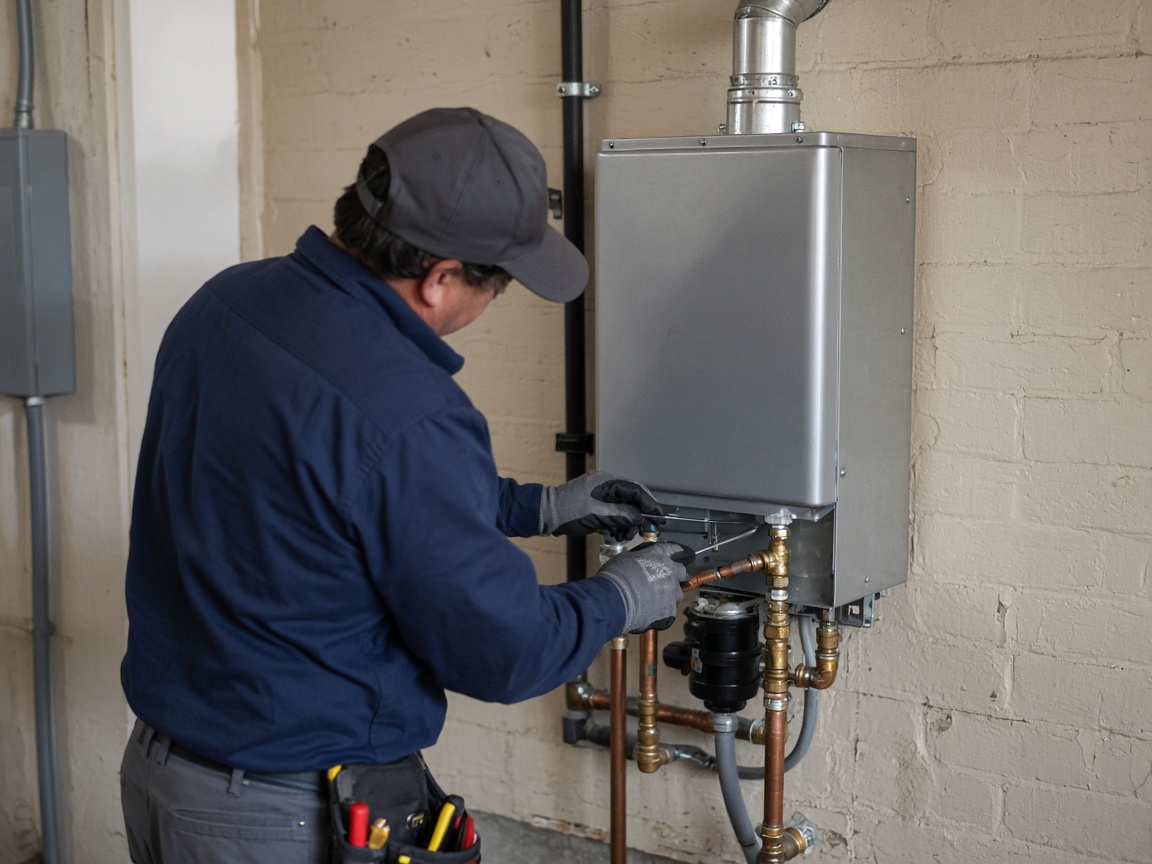
Tankless Water Heater Repair in San Antonio is different from fixing a conventional tank unit, and that difference matters for your home. A tankless unit heats water only when a tap or appliance calls for it, so a fault shows up as a dead hot-water tap, lukewarm output, a unit that cycles on and off, or a blinking error code on the front panel. Water Heater Repair San Antonio works on tankless units across the city, from the post-war bungalows near Southtown and King William to newer builds on the north side of Bexar County. We start by reading the error code and checking the unit's operating history, then inspect the parts that most often fail in San Antonio water.
Why Choose Us for Tankless Water Heater Repair
Our team approaches tankless repair as a diagnosis first. Many error codes on these units point to more than one cause, and replacing a part before confirming the fault is how homeowners end up paying for the same problem twice. We test the flame sensor, igniter, gas pressure, inlet water filter, and scale condition before recommending a repair, and we show you what we found. Every job ends with a walk-through of the old parts beside the new ones, so you can see the wear for yourself.
We work from our shop at 7843 Fortune Dr, and we serve homes across San Antonio and Bexar County. Before any work begins, you receive written findings that describe the fault, the parts involved, and the repair options, so you approve the scope with full information.
Signs Your Tankless Water Heater Needs Attention Now
San Antonio's hard water is the single biggest reason tankless units lose efficiency over time. Mineral scale builds up on the heat exchanger and restricts flow, so the unit works harder, runs hotter, and eventually throws error codes. Hot summers push these units harder too, because cold inlet water drawn in July demands more heating than the mild winter months, and a scaled heat exchanger struggles to keep up.
Watch for these warning signs: hot water that takes longer to reach the tap, a unit that shuts off mid-shower, a rattling or whistling sound during heating, a faint sulfur or gas smell, or an error code that returns after a reset. Acting early keeps a scale problem from becoming a heat exchanger replacement.
Our Process for Tankless Water Heater Repair
Every job follows the same sequence so nothing gets skipped. First, we read the error code and review the unit's model and installation. Second, we inspect the gas supply pressure, venting, and condensate drain on gas units, or the electrical supply and heating elements on electric units. Third, we check the inlet isolation valves and the inlet water filter screen. Fourth, we test the igniter, flame sensor, and control board where applicable. Fifth, we write up our findings and walk you through them before any repair begins. Once you approve, we complete the repair, run the unit through a full heating cycle at several fixtures, and walk you through the old and new parts before we leave.
Parts and Components Inside a Tankless Water Heater
The heat exchanger is the core of the unit. It is a series of copper or stainless passages where water picks up heat, and it is where San Antonio's mineral scale collects. When scale narrows those passages, flow drops and error codes appear. A descaling flush with a food-safe acid solution often restores flow, but a heavily scaled or cracked exchanger needs replacement.
The inlet water filter sits at the cold-water connection and catches sediment before it reaches the heat exchanger. A clogged screen starves the unit of water and can trigger a flow error, and cleaning it is one of the fastest checks in the process.
The flame sensor and igniter manage gas units. The igniter lights the burner, and the flame sensor confirms the flame is burning. When the sensor is coated or the igniter is weak, the unit lights, shuts off, and throws an ignition error. The gas control valve regulates fuel to the burner and is tested during every gas-side inspection.
The control board reads the temperature sensors and flow switch, then decides when to fire. A failed sensor or flow switch can make a healthy unit appear faulty, so we test those components before replacing the board. The venting system and condensate drain complete the picture on condensing gas units, since a blocked vent or clogged drain line triggers safety shutdowns.
Technician insight
In San Antonio, the thing that catches most people out with Tankless Water Heater Repair is hard water. Our well-known Edwards Aquifer water deposits scale inside the heat exchanger faster than many owners expect, and the unit starts throwing flow or temperature errors that look like electronic failures. Before anyone replaces a control board, have the inlet filter checked and the heat exchanger inspected for scale, because a descaling flush often solves the problem.
Tankless Unit Cycling in a King William Home
The homeowner in an older King William home reported that hot water would cut out mid-shower and the display kept showing a flow error after resets. We found a clogged inlet water filter and a heat exchanger coated with scale, which restricted flow and caused the unit to shut down. We cleaned the filter, performed a descaling flush, and confirmed full temperature and flow at several fixtures before walking the homeowner through the old filter screen and the cleaned components.
Tankless Water Heater Repair Services We Offer
✓Tankless Water Heater Descaling Flush
A descaling flush dissolves mineral buildup from the heat exchanger, restoring full flow and removing the scale that triggers error codes in San Antonio's hard water.
✓Tankless Error Code Diagnosis
We read the error code, test the components it points to, and confirm the actual fault, so you replace only the part that has failed.
✓Tankless Igniter and Flame Sensor Repair
Replacing a weak igniter or coated flame sensor stops ignition failures and restores reliable hot water on gas units.
✓Tankless Inlet Filter and Isolation Valve Service
Cleaning the inlet water filter and servicing the isolation valves restores flow to the unit and makes future flushes easier to perform.
✓Tankless Gas Valve and Burner Repair
Testing the gas control valve and burner assembly keeps the unit firing at the correct pressure and prevents uneven heating.
✓Tankless Venting and Condensate Drain Repair
Clearing vent blockages and condensate drain lines prevents safety shutdowns and keeps condensing units operating within their safe limits.
✓Tankless Water Supply Line and Shutoff Valve Repair
Replacing worn supply lines and failing shutoff valves stops leaks at the unit and gives you a reliable way to isolate the water heater.
How it works
- 1
Read the Error Code and Review the Unit
We read the error code on the display, note the model and installation details, and review how the unit has been behaving, including whether the fault comes back after a reset.
- 2
Inspect Gas, Venting, and Electrical Supply
On gas units we check supply pressure, venting, and the condensate drain. On electric units we check the electrical supply and heating elements. These checks rule out the common causes outside the unit itself.
- 3
Check Water Flow and Scale
We inspect the inlet water filter and isolation valves, then assess the heat exchanger for scale. In San Antonio's hard water, scale is often the root cause of flow and temperature complaints.
- 4
Test Ignition and Control Components
On gas units we test the igniter, flame sensor, and gas control valve. We test the control board, temperature sensors, and flow switch to confirm which part has actually failed.
- 5
Deliver Written Findings Before Work Begins
You receive written findings that describe the fault, the parts involved, and the repair options. We begin only after you have reviewed them and approved the scope.
- 6
Complete the Repair and Walk Through the Parts
We complete the approved repair, run the unit through a full heating cycle at several fixtures, and show you the old and new parts side by side before we leave.
Pricing
Written findings come before any work begins, so you review the diagnosis and approve the scope first.